Francis, the Bishop of Rome, has come out with a new apostolic exhortation, The Joy of the Gospel, that recognises the need to resolve “the structural causes of poverty” without delay.
Everyone should ponder over these words:
Welfare projects, which meet certain urgent needs, should be considered merely temporary responses. As long as the problems of the poor are not radically resolved by rejecting the absolute autonomy of markets and financial speculation and by attacking the structural causes of inequality,[173] no solution will be found for the world’s problems or, for that matter, to any problems. Inequality is the root of social ills.
Penang is asking the federal government to fulfil its pledge on public transport by building an LRT or MRT system – but the danger with that is the state could risk having a monorail system dumped on it!
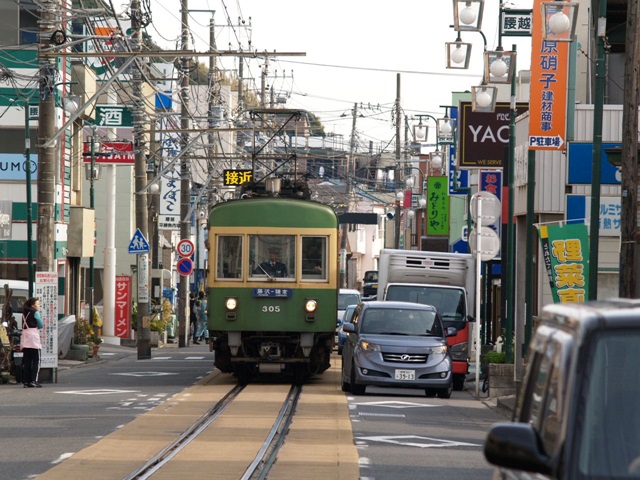
A tram cruising along a narrow street in Japan.
Residents of Tecoma, a village 40km east of Melbourne in Australia, took their campaign against a fast food giant to a ‘higher note’ with this creative performance.
The Jabatan Perancang Bandar dan Desa will be briefing the public on the draft Penang Hill special area plan on Sunday, 1 December at 10.00am at Auditorium A, fifth floor, Komtar.
Update, 24 November 2013:
The winners for the three vice-presidents’ spots –
Incumbent Salahuddin Ayub – 917 votes (753 in 2011),
Former information chief Tuan Ibrahim Tuan Man – 849 (n/a) and
Incumbent Husam Musa – 520 (660).
Incumbent Mahfuz Omar – 504 (616) and Abu Bakar Chik – 364 (previously contested for central working committee) failed to make it.
Original post 23 November 2013:
Mohamad Sabu has retained the Pas deputy presidency with an even larger majority, while Nizar Jamaluddin finishes third in the central working committee polls as the professionals and bridge-builders throttle forward despite the “hand-brake” applied by conservatives.
A couple of climate scientists speaking on the sidelines of the UN climate talks in Warsaw have called for radical economic change, including economic de-growth especially in developed nations, if we are to have any hope of curbing global warming. They also said high energy consumers, especially among the wealthier classes, have to reduce their carbon footprint.
Activists have gathered in Utah this week to protest at the secrecy surrounding the latest round of TPP negotiations, which will grant large corporations extensive new powers at the expense of the environment, public health and national sovereignty.
Francis, the Bishop of Rome, has been photographed with anti-fracking activists from Argentina. That’s not surprising. At the start of his ministry in the Vatican, Francis had mentioned his concern about our broken relationship with Creation. He is now believed to be preparing a major new encyclical on the environment.
Posing with Francis are anti-fracking activist Juan Pablo Olssen and Argentinian politician and environmental filmmaker Fernando Solanas – Photograph: Olssen
Economist Dean Baker, co-director of the Centre for Economic and Policy Research, based in Washington DC, explains what the United States could have done to rein in its housing bubble. Some lessons for Malaysia here, I think.
Corporations, many of them believed to be developer firms, are expected to outnumber NGOs by ten to one at the mainland Penang Local Plan hearings, beginning on 26 November.
An informed source has revealed to me that at one upmarket seafront apartment suites complex in northern Penang Island, the actual occupancy rate is just 10 per cent, even though the apartments have been sold out.
Contrary to popular belief that much of the property speculation/investment in high-end properties in Penang is by foreigners, the rough breakdown by nationality of owners of these particular apartments is as follows:
Malaysians based in the country (60 per cent),
Malaysians residing/working abroad (20 per cent), and
What is the Commons? All the natural and cultural resources that should be accessble to everyone in society. The Commons includes the hills, the seas and beaches and rivers, forests, even park land. But now corporate predators are eyeing, gobbling up or “enclosing” the Commons under various forms of privatisation.
This is not something peculiar Malaysia; it is a global phenomenon. Take a look at 1200 Australians coming together in a protest to call for the reversal of legislation that would allow 99-year leases for private development in national parks.
Hands off the Commons!
The latest round of secret negotiations for the Trans-Pacific Partnership Agreement is underway in Utah, USA. The principal beneficiaries are expected to be large corporations.
A lot of attention has been given to Penang Island, but how do we revitalise Seberang Perai in a way that would be more authentic to local cultures and would promote a sustainable domestic economy?
Sunset at Bukit Mertajam – Photograph: Haha Lee
There are only half as many ferries shuttling between Penang Island and mainland Penang as there were in the late 1970s/early 1980s – and now they are thinking of cutting back the ferry service even further?
Is this a scheme to help boost traffic on the soon-to-be-opened Second Penang Bridge – in the same way that they halved the ferry service a few years after the first Penang Bridge was opened in September 1985? (They never rebuilt the old ferry terminal on the mainland that collapsed in July 1988 under the weight of about 10000 passengers thronging the terminal. The ferries that used to docked at the old terminals on the isand and mainland were then phased out.)
The ferry service has been been pathetic since then and it is no wonder that Penang Port is losing money on the ferries, as more and more people are forced to use the bridge. In any case, the ferry service is an integral part of public transport – a public service – and it should be subsidised if it is true that it can barely break even.
The present management should quit if it cannot provide a reliable and efficient service. People are fed up with the poor service especially during rush hours, at night and on public holidays.
Now take this poll:
[yop_poll id=”4″]
A discussion on Parit Buntar MP Mujahid Yusof Rawa’s new book Dialogue with Churches: A Peace Travelogue was held at the service centre of the Selangor State Assembly member for Hulu Kelang on 11 November.
The panel featured Mujahid, former Perlis mufti Mohd Asri Zainal Abidin (currently an associate professor in Islamic studies at USM), Hulu Kelang rep Saari Sungib and a Christian pastor.
The Edge has carried a fascinating news story about the degraded Bukit Relau in Penang. But the question remains: how was the land converted from hill-land to low-density housing and who was responsible for that?
Bukit Relau: Tycoon breaks silenceWritten by Sangeetha Amarthalingam, fz.com (contributor to theedgemalaysia.com)
GEORGE TOWN (Nov 18): In an astounding revelation, Penang tycoon Tan Sri Tan Kok Ping whose company illegally cleared parts of Bukit Relau early this year has vowed that development will not happen on that land.
Bridge-builder Abdul Rahman Kasim, the Tasik Gelugor Pas information chief, shares with us his predictions for the upcoming party polls on Friday evening (with results expected on Saturday evening).
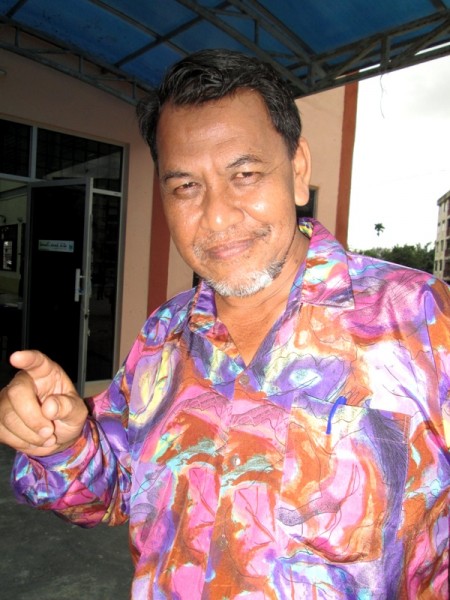
Abdul Rahman Kasim
According to the Penang Hill Local Plan, the recommended maximum carrying capacity of the hill is 10000 people daily – a threshold that has been hit or even exceeded during peak periods with the expanded capacity of the Penang Hill Railway following the controversial decision for the track to bypass the Middle Station.
If cable cars are introduced, even more people will throng the hill, pushing the figure well beyond 10000/day. So no escape from the madding crowd for some peace and serenity then.
This is from the Local Plan: