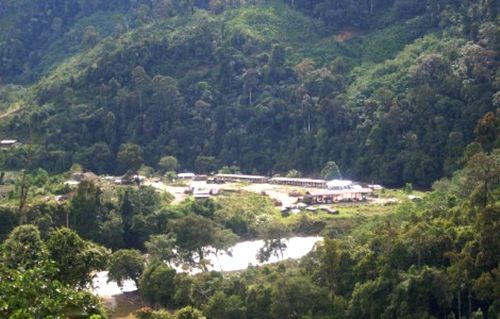
Bujang Valley, one of several Indianised kingdoms in Southeast Asia, existed long before neighbouring empires such as Majapahit (1200 AD) and Sri Vijaya (700 AD).
View Larger Map
The early Bujang Valley civilisation between the first and the fifth century (earlier than previously thought) was probably based on animism before coming under Hindu and Buddhist influence from the fifth to the fourteenth century.
Now, here’s the strange thing: most Malaysians and visitors know about Malacca and Penang as historical sites, but few have even heard of the Bujang Valley. (Today is actually George Town World Heritage City Day, a holiday in Penang from this year.) In fact, very few residents of Penang and Kedah know about the fascinating archaeological museum amidst reconstructed Hindu and Buddhist temple foundations, discovered in the valley and relocated to the museum grounds, near a gurgling stream on a lush hill-slope in Merbok in Kedah. The museum is worth visiting if you are interested in the Hindu and Buddhist figurines and other artefacts discovered during excavation.
Archaeological interest covers sites spanning a thousand square kilometre region from Merbok in the north to Bukit Mertajam on mainland Penang in the south. Gunung Jerai, at 1,200 metres the highest peak in Kedah, was the most visible landmark for sea farers heading to the region.
Time to re-write our school history text books, don’t you think?