Home Blog Page 98

The Curitiba model: Towards a sustainable, liveable community and city

A short commentary by MBPP councillor Lim Mah Hui:

Today I wish to share with you a short video on Curitiba, a medium sized city of 2m in eastern Brazil that transformed itself into one of the most liveable in the world. In 2010, it was given the Global Sustainable City Award.

Appointed to the Penang Transport Council; your suggestions, please

So I have been appointed to the Penang Transport Council. I thank the state government for appointing this “vocal critic” (cough, cough) to the council as a representative of Aliran.

Whatever happened to 1MDB’s Cayman Islands funds?

In early May, the Financial Times of London carried an in-depth feature on the City of London as a global money laundering hub, which included an expose of the Swiss private bank BSI in the UK.

Moscow mulls closure of troubled monorail

There aren’t that many monorail systems in Europe. One of the few is in Moscow – and it is bleeding red ink, burdening taxpayers.

This is Vukan R Vuchic, a public transport expert, professor of the University of Pennsylvania, and former consultant for the US Department of Transportation on planning, design and operations of transport systems. Notice that he says the best tried and tested modes are buses, trams and metros.

China embraces modern trams/light rail – much cheaper than elevated LRT/monorail

China is embracing light rail in a big way. Check out this report here.

Step forward light rail systems, the construction costs of which are 20-30% of a metro, with a similar wave of construction and development now underway across China.

At the end of 2014, eight Chinese cities operated light rail networks, with a cumulative distance of 192.6km, and several cities are on course to open their first lines in 2015. Plans are now in place to develop more than 2000km of lines by 2020 and up to 4000km of lines by 2050. But with 319km of light rail infrastructure currently under construction, and 1835km already in the design phase, this number is likely to be out of date very soon.

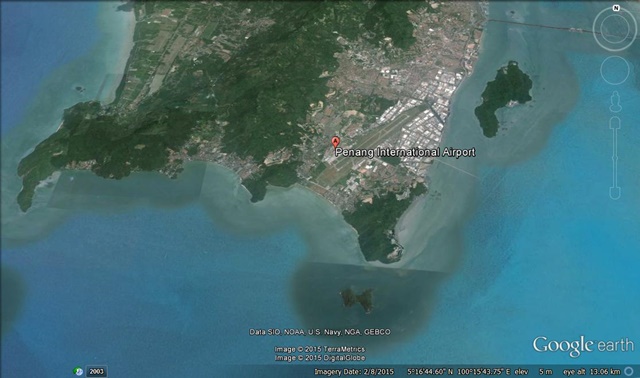
It is important to realise that modern trams may be built at street level, but they can also have dedicated lanes and be elevated over difficult or congested stretches. This is what the original transport masterplan consultants Halcrow (to whom the Penang state government paid over RM3m) recommended for the 17.4km route from the Penang airport to Weld Quay route – dedicated lane at street-level, elevated along certain stretches and then shared roads when entering George Town. The cost RM40-80m/km – or just over RM1bn.

Third bridge, tunnel talk – but no hurry to hand/take over Penang ferries

A lot of talk in the media about the RM3.7bn tunnel or a RM1.8bn third Penang bridge. But not much talk about handing over the Penang ferries to the state government.

Don’t be fooled by unanimous land reclamation motion in Penang

Nothing has changed with the passing of the unanimous motion on land reclamation by the Penang state assembly on 20 May 2016.

Hawaii’s elevated rail hit by huge cost overruns, delays – and Penang wants elevated LRT?

From an initial estimate of US$4.6bn to the current estimate of US$6.7bn (RM27.3bn) and counting – a huge cost overrun for Hawaii’s 20-mile (32.2km) elevated rail system.

The RM27.3bn price tag works out to a staggering RM847m/km and, when completed, it could be the most expensive transit system on a per capita basis in US history. And the Penang government wants an elevated LRT system.

Road to folly: Will building more roads solve traffic congestion?

MBPP councillor Dr Lim Mah Hui has written the following comment piece:

Are Penang transport masterplan’s projected ridership figures realistic?

The Penang transport masterplan, put out by SRS Consortium, has come up with projected ridership figures for the expensive elevated LRT from Komtar to Penang Airport. What is crucial is whether these ridership figures are realistic or inflated – for that will determine whether or to what extent the people of Penang will be saddled with operational losses.